Acne marks and dark spots — commonly calleddaag dhabbe— are one of the most searched skin concerns in Pakistan, and for good reason. Between sun exposure, pollution, humidity, and the temptation to pick at a fresh pimple, post-acne marks can stick around long after the breakout itself has healed. The good news: with the right ingredients and a bit of patience, most marks fade on their own timeline — you just need to support your skin instead of working against it.
Lamiya
July 13, 2026
Acne marks and dark spots (daag dhabbe) are one of the most searched skin concerns in Pakistan. Here's what actually causes them, which ingredients help, and a simple 2-step routine to fade them safely.
Quick answer:Acne marks are flat, discolored spots left behind after a pimple heals — not active acne — and usually fade in 3–6 months with consistent use of brightening ingredients like Vitamin C, Niacinamide, and Alpha Arbutin, plus daily sunscreen.
What's the Difference Between Acne Marks, Dark Spots, and Pigmentation?
These three terms get used interchangeably, but they're not exactly the same thing.
ConcernWhat it looks likeCommon causeTypically fades withAcne marks (PIH)Flat brown, pink, or reddish spots where a pimple used to beInflammation after a breakout heals3–6 months, faster with brightening activesDark spots / sun spotsSmall, well-defined brown patchesRepeated sun exposure over timeMonths of consistent SPF + brightening ingredientsPigmentation / uneven toneLarger, less defined patches of discolorationSun, hormones, heat, or geneticsSlow, ongoing care; may need dermatologist inputNote: raised or textured acne scars are different from flat pigmentation marks and usually need in-clinic treatment rather than skincare alone. This guide focuses on flat, color-based marks — the kind a serum and face wash routine can realistically help with.
What Causes Acne Marks and Dark Spots on Pakistani Skin?
Quick answer:The biggest triggers are sun exposure, picking or popping pimples, pollution and dust, and skipping sunscreen while using active ingredients.
- Sun exposure:Pakistan's strong sun can darken a fresh acne mark and make it take much longer to fade.
- Picking or popping pimples:This increases inflammation and is one of the most common reasons marks turn darker and last longer.
- Pollution and dust:Daily outdoor exposure can clog pores, trigger new breakouts, and leave a fresh cycle of marks behind.
- Hard water:In many Pakistani cities, hard water can leave skin feeling dry or irritated, which can slow down healing.
- Skipping sunscreen:Using brightening actives without SPF can make marks more stubborn instead of less.
Which Ingredients Actually Help Fade Acne Marks and Dark Spots?
Quick answer:Alpha Arbutin, Niacinamide, and Vitamin C are the three ingredients most commonly used in brightening routines for acne marks and dark spots.
Alpha Arbutin
Alpha Arbutin is a popular ingredient in routines targeting the appearance of dark spots and uneven tone. It's gentler than many older brightening ingredients, which makes it a common pick for regular, ongoing use.
Niacinamide
Niacinamide helps support a smoother, more even-looking complexion and is often included in routines for oily or acne-prone skin because of how well it's typically tolerated.
Vitamin C
Vitamin C is a widely used ingredient in glow- and brightening-focused routines. It's often paired with SPF in the morning, since the two can work well together for people focused on tone and dullness.
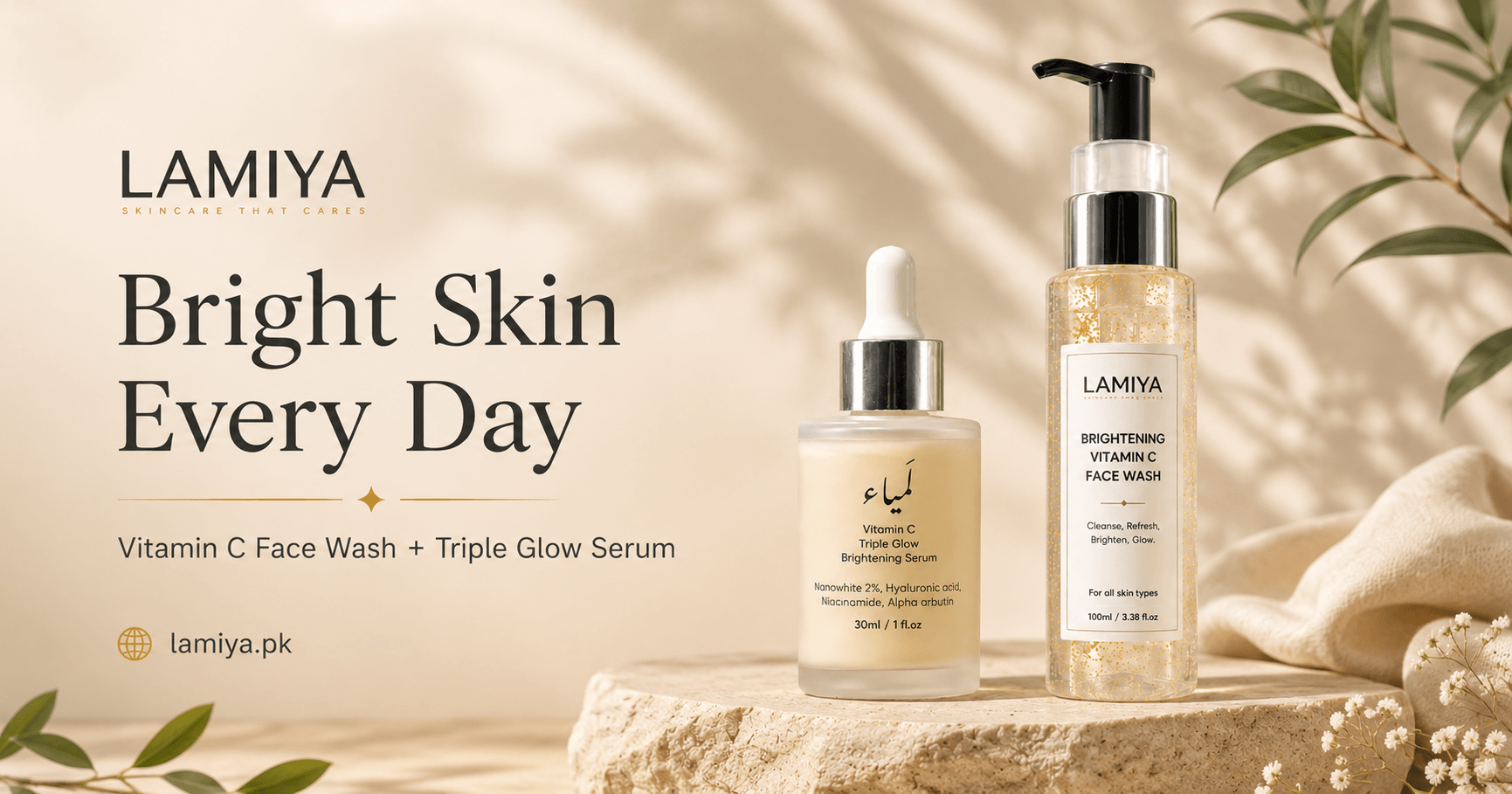
Lamiya'sVitamin C Triple Glow Brightening Serumcombines all three of these ingredients — Vitamin C, Alpha Arbutin, and Niacinamide — in one formula, which is why it's a common starting point for people dealing with acne marks alongside dullness.
How Do You Build a Routine to Fade Acne Marks and Dark Spots?
As with most skincare concerns, consistency matters far more than how many products you use. A focused 2-step routine is usually enough to start.
Step 1 — Cleanse with Lamiya Brightening Facewash
Start with a gentle cleanse that removes oil, dust, and impurities without stripping the skin.Lamiya Brightening Facewashis formulated with Vitamin C, Niacinamide, and Hyaluronic Acid for daily use, morning and night.
Shop Lamiya Brightening Facewash — Rs. 999 (50% OFF)
Step 2 — Treat with Lamiya Vitamin C Triple Glow Brightening Serum
Apply 3–4 drops to clean, dry skin and press it in gently rather than rubbing. This serum is built around Vitamin C, Alpha Arbutin, and Niacinamide — the ingredients brightening-focused routines commonly use for acne marks and dark spots.
Shop Lamiya Vitamin C Triple Glow Brightening Serum — Rs. 1,399 (50% OFF)
Don't Forget Sunscreen
Brightening ingredients and unprotected sun exposure don't mix well. If you're using this routine in the morning, follow it with a broad-spectrum SPF 30 or higher — this one step protects the progress you're making and helps prevent new marks from forming.
Save with the Lamiya Brightening Duo
If you'd rather start with both products at once, theLamiya Brightening Duobundles the face wash and serum together.
Shop Lamiya Brightening Duo — Rs. 1,999 (50% OFF) — Free Shipping + COD
A Word of Caution: Skip Unregulated "Whitening" Products
Quick answer:Avoid unregulated skin-whitening or bleaching creams that don't clearly list their ingredients — some have been linked to steroid dependency or unsafe mercury levels, which can damage skin long-term.
Pakistan's market has no shortage of overnight "whitening" creams promising instant results. Health authorities and dermatologists have repeatedly warned against unregulated products with unclear ingredient lists. DIY remedies like raw lemon juice or baking soda are also best avoided — they're highly acidic or abrasive and can irritate skin, sometimes making dark marks worse instead of better. Stick to products that clearly list their ingredients at tested, safe concentrations.
Do's and Don'ts for Fading Acne Marks Safely
Do
- Patch test any new product for a few days before applying it to your whole face
- Use sunscreen every morning, even indoors or on cloudy days
- Give your routine at least 6–8 weeks before judging results
- Introduce one active ingredient at a time if your skin is sensitive
Don't
- Don't pick, pop, or pick at breakouts — this is one of the biggest causes of stubborn marks
- Don't over-exfoliate; it can irritate skin and make marks look worse, not better
- Don't expect marks to disappear overnight — flat pigmentation fades gradually, not instantly
- Don't skip moisturizer if your skin feels tight or dry after cleansing
How Long Does It Take for Acne Marks and Dark Spots to Fade?
Quick answer:Most people notice fresher, brighter-looking skin within 2–4 weeks, while dark spots and deeper marks typically take 6–8 weeks or longer of consistent use to visibly fade.
Results vary by skin type, how the marks formed, and how consistently sunscreen is used. Marks from recent, mild breakouts tend to respond faster than older, sun-darkened spots.
Who Is This Routine Best For?
- Post-acne marks and daag dhabbe
- Dark spots from sun exposure
- Uneven skin tone
- Oily or acne-prone skin looking for a lightweight routine
- Anyone who wants a simple, low-maintenance glow routine
If your acne is active, inflamed, or cystic, or if marks are raised rather than flat, it's worth speaking with a dermatologist alongside any skincare routine.
Frequently Asked Questions
Do acne marks go away on their own?
Yes, most flat acne marks fade on their own over time as skin naturally renews itself. Brightening ingredients like Vitamin C, Niacinamide, and Alpha Arbutin can help speed up that process and prevent marks from getting darker from sun exposure.
Can I use Vitamin C serum and Alpha Arbutin together?
Yes. Lamiya's Vitamin C Triple Glow Brightening Serum already combines Vitamin C, Alpha Arbutin, and Niacinamide in one formula, so there's no need to layer separate products or worry about the order.
Is Niacinamide good for oily, acne-prone skin?
Niacinamide is one of the most commonly recommended ingredients for oily and acne-prone skin because it's typically well-tolerated and pairs easily with other brightening actives.
Do I really need sunscreen while using a brightening serum?
Yes. Sunscreen isn't optional here — brightening ingredients can make skin more sensitive to the sun, and unprotected sun exposure can undo the progress your routine is making.
Can this routine remove acne scars too?
This routine is built for flat, color-based marks and dark spots. Textured or raised acne scars usually need in-clinic treatments and are best discussed with a dermatologist.
داغ دھبے کم کرنے کے لیے کونسا Routine بہتر ہے؟
Daag dhabbe کے لیے ایک simple 2-step routine کافی ہو سکتی ہے: پہلے brightening facewash سے صاف کریں، پھر Vitamin C اور Alpha Arbutin والا serum apply کریں۔ صبح sunscreen لگانا نہ بھولیں، کیونکہ یہ marks کو مزید dark ہونے سے بچاتی ہے۔
Acne Marks کتنے دنوں میں ختم ہوتے ہیں؟
یہ ہر شخص کی skin پر منحصر ہے۔ ہلکے marks 2–4 weeks میں بہتر نظر آ سکتے ہیں، جبکہ پرانے یا dark spots کے لیے 6–8 weeks یا اس سے زیادہ consistent routine کی ضرورت ہو سکتی ہے۔
Final Thoughts
Acne marks and dark spots are frustrating, but they're also one of the most manageable skin concerns when you approach them with the right ingredients and a bit of patience. Stick to a simple routine, protect your skin from the sun every single day, and give it time to work.
Cash on delivery available. Free shipping across Pakistan.
Continue reading:Best Vitamin C Serum & Face Wash for Glowing Skin in PakistanorTrending Skincare 2026: Expert Tips & Face Serum Recommendations.
Have a question about this article?
We read every message — routine help, ingredient questions, or order support.
Message us